

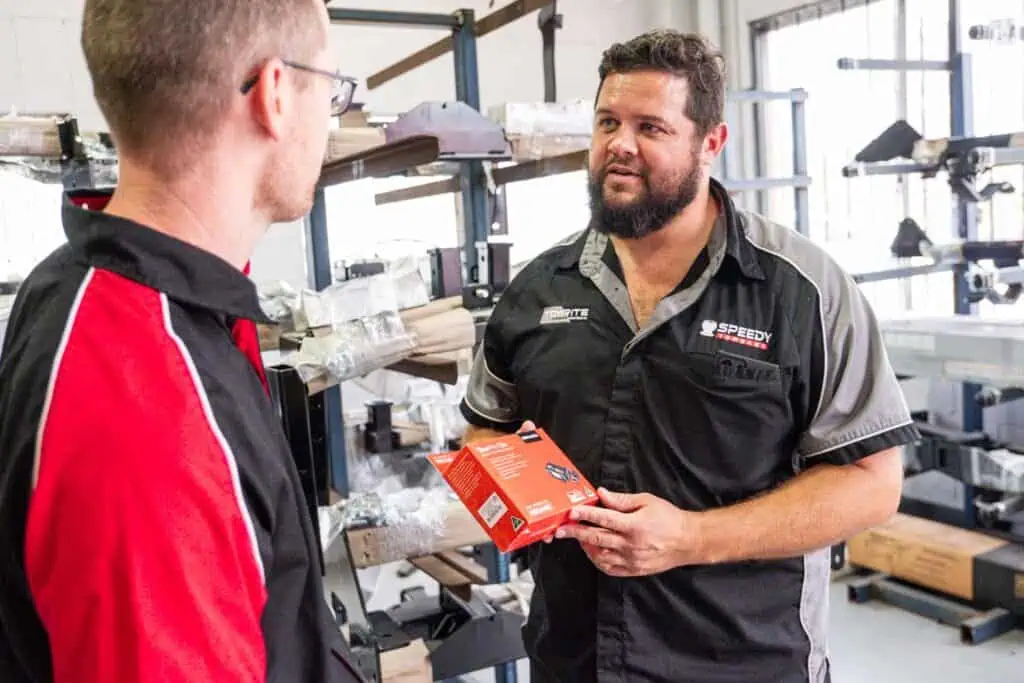
Compliance with the relevant regulations is a necessity if you’re going to enjoy a safe towing experience. If you’re new to towing, you might be scratching your head over your trailer braking requirements. We get a lot of people coming into Speedy Towbars and asking “Do I need a brake unit?”
Legal Requirements of Brake Units
ADR 38 is the Australian Design Rules Standard that applies to trailer braking, providing the relevant legislation determining what size trailers need braking units. Here are the three categories it puts trailers into, according to their Gross Trailer Mass (GTM is the fully loaded weight of a trailer):
GTM under 750kg: Brake units and brake controllers aren’t required.
GTM between 750kg and 2000kg: A brake unit is legally required and needs to operate on at least one axle. Mechanical, hydraulic or electric brake units can be used.
GTM above 2000kg: An electric brake system with an electric brake controller is legally required.
Types of Brake Systems
Let’s take a closer look at the different types of brake systems available. These can be mechanical, hydraulic, electric or electric-hydraulic depending on the trailer’s weight and what you’ll use it for.
Mechanical Trailer Brakes
Simple in design and operation, these are popular on smaller trailers. Mechanical override brakes feature a cylindrical sleeve on the coupler that activates when the towing vehicle brakes.
You see, as the vehicle slows down, the trailer’s momentum pushes it forward, which slides the coupler into the sleeve. This activates the handbrake lever, which applies the cable brakes evenly across the trailer’s wheels.
This is an extremely consistent method, because braking force will always be proportionate to how hard the towing vehicle brakes. You get a smooth and predictable braking experience, and there’s no need for any electrical wires or connections. What’s more, a flippable lock lever prevents engagement while reversing so the brakes don’t automatically engage because of the pushing motion.
Hydraulic Brakes
Hydraulic trailer brakes are the next step up in braking technology. If you’ve got a medium weight trailer, these will give you a nice consistent performance.
They also feature a cylindrical sleeve on the coupler. Instead of cables though, they incorporate a brake fluid reservoir. When the towing vehicle brakes, the trailer’s momentum pushes the sleeve into the receiver, generating hydraulic pressure.
The pressure is transferred through fluid-filled lines to transfer the braking power. It’s similar to your vehicle’s master cylinder, applying equal pressure to all brakes simultaneously. You get more consistent braking performance and less maintenance compared to cable systems.
Hydraulic systems come with a fold-away brake lock for reversing the trailer. It’s important to note in Australia they’re only legal for trailers up to 2000kg GTM.
Electric Brakes
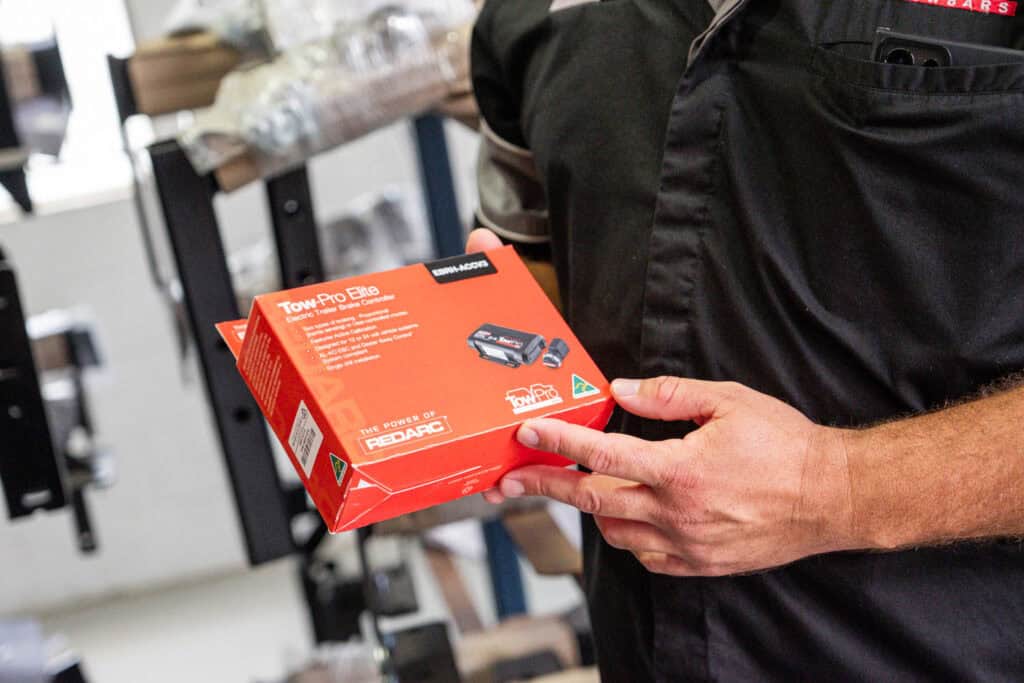
You can identify these by brake drums with two wires exiting from the back of the hub. Contrary to what a lot of people think, the wire for electric brakes runs through your existing 7-pin plug. You don’t require a 12-pin plug to operate them. You do need a brake controller installed in your vehicle though.
Electric brakes are legally required on trailers over 2000kg GTM, an electric braking system is the gold standard for reliability and control. When the driver puts their foot on the brakes, the controller in the vehicle sends a proportional signal to the brakes on the trailer. Braking force can be adjusted depending on the road and conditions, and modern controllers have features like manual override control to manually control the trailer’s brakes without having to apply the brakes in your vehicle. This is a safety feature that will help drastically when it comes to things like trailer sway.
Electric Hydraulic Brakes
These offer the best braking performance for very heavy trailers, especially boats as the trailer’s axles enter the water. By having a disc platform instead of a drum, they don’t hold water which would lead to rust and corrosion. They’re an advanced system combining the electric activation with hydraulic pressure.
Identified by disc brakes instead of drums, they have a hydraulic pump assembly mounted on the trailer’s A-frame. Electric hydraulic brakes require a separate 12V power source combined with an electric brake unit, which can be provided either through a dedicated “hot wire” connected to pin 2 of your trailer plug or through a 12-pin plug or Anderson plug. Always consult the manufacturer’s wiring diagram before getting your vehicle set up.
Breakaway Systems
Let’s touch on breakaway systems briefly. Australian regulations require all trailers over 2000 kg to have one installed. It’s a critical safety feature that applies the brakes automatically if the trailer becomes detached from the towing vehicle. You can identify it by a battery box or indicator light on the A-frame, and a coiled pull cable attached to the car, separate to the towbar.
Bluetooth Brake Units
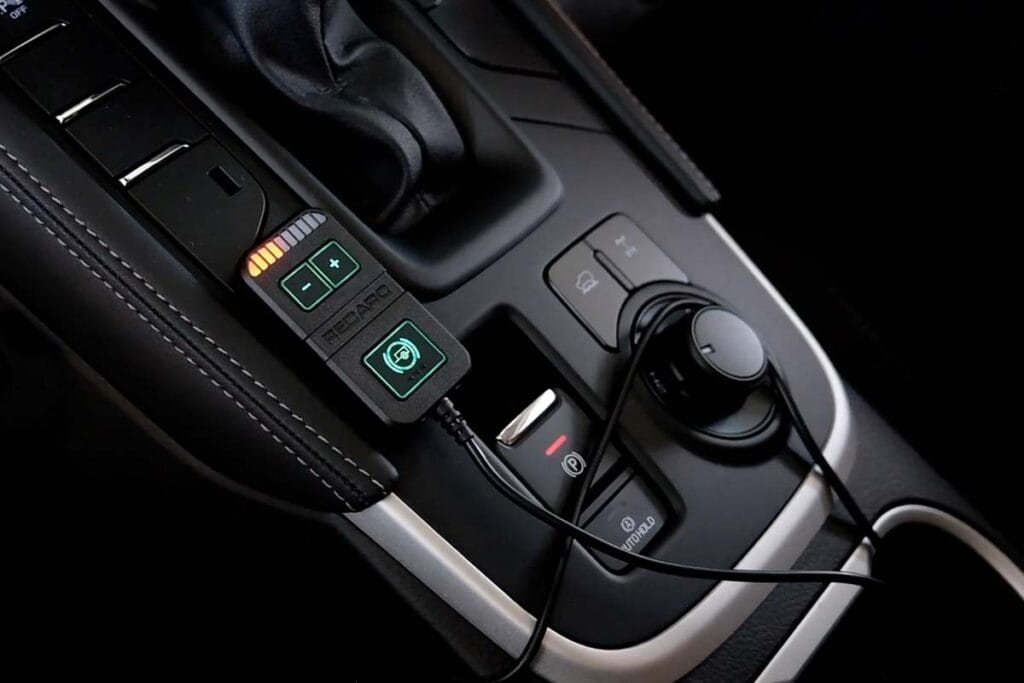
If the same trailer gets swapped between multiple towing vehicles, a Bluetooth brake controller will make your life a lot easier. The joys of modern technology!
These units are wired directly to the trailer itself, allowing the driver to control the braking system via a Bluetooth app or a dedicated Bluetooth controller in the vehicle. It means you don’t need to install a permanent brake controller in each vehicle that tows the trailer!
According to Australian legislation, a brake unit must be operable from the driver’s seat. Because Bluetooth brake controllers meet this requirement, they’re a legal solution for most applications.
It’s also worth noting Bluetooth brake controllers are only compatible with electric and electric-hydraulic brake systems. Don’t try them with mechanical or standard hydraulic systems.
Contact Speedy Towbars
Selecting the right braking system is an important consideration for towing safety, confidence and enjoyment. Making sure your vehicle is equipped with the right set-up to match your trailer is of utmost importance to us at Speedys. Hopefully, the information above sheds a bit of light on the topic of how to identify which system you have or need. Remember if you need any information at all, or want to chat about the right system for your towing setup, the Speedy Team is here to help!
Get in touch today and let’s talk all things towing!

Jordan is the co-owner of Speedy Towbars and a trusted source of towbar knowledge for Queensland drivers. When he's not installing towbars, he treasures time with his family and hitting the road for caravanning adventures!