

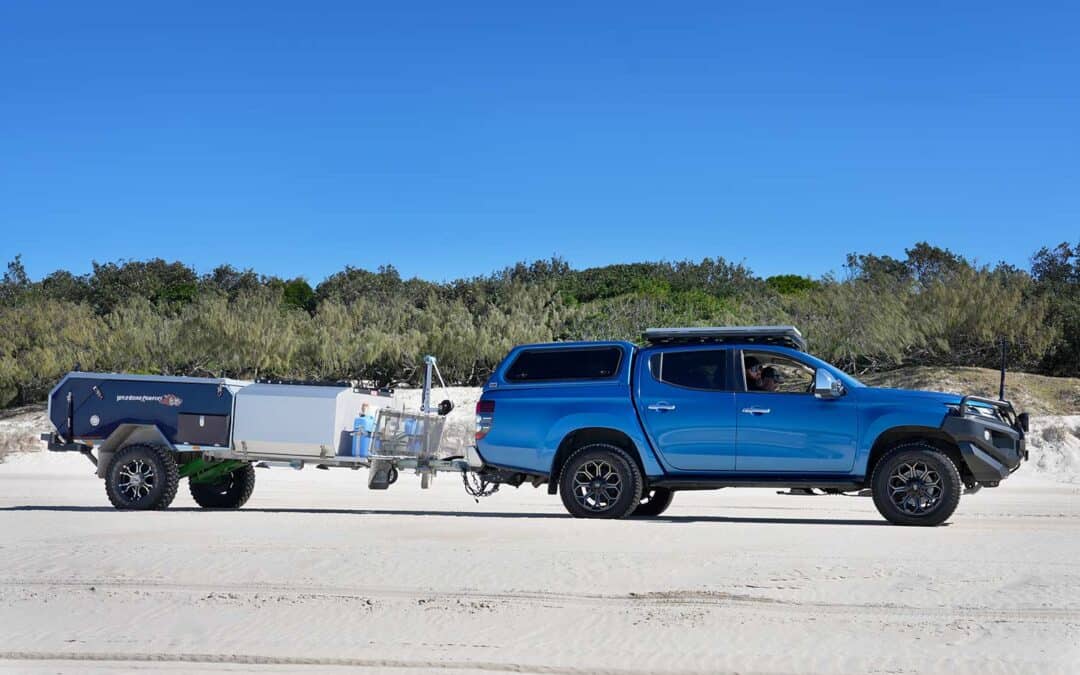
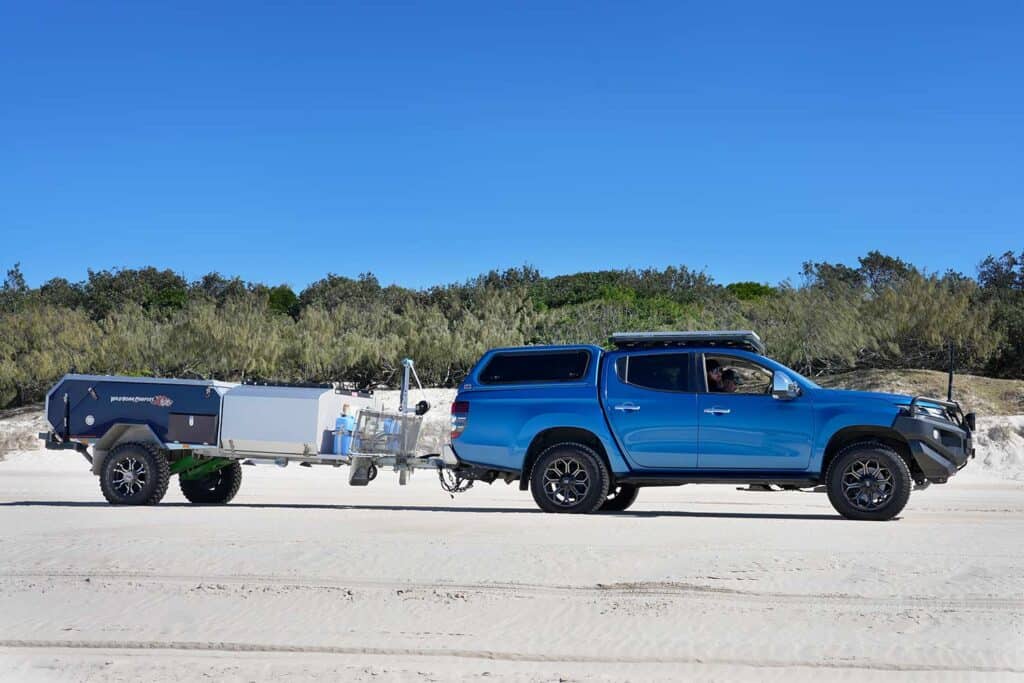
For Queenslanders the call of the open road is strong! Adventure is all around us and we love getting out there and finding it. There’s nothing better than hitching up our trailer or campervan to the towbar and hitting the road.
From bush tracks to beach driving, there’s nothing quite like getting off-road with your family or mates… and your trailer too of course! Off-road towing is a whole new ball game that comes with its own set of challenges. It’s a lot of fun conquering them, but being prepared and doing a bit of research before you head out there will be very useful. If you don’t, an epic holiday could turn into a bit of a slog.
Keep in mind that off-roading or beach driving can add a lot more stress and wear on your vehicle, trailer and setup. Being extra vigilant and not overdoing it is essential in keeping your rig, yourself and anybody else around you safe.
Let’s go over some off-road towing safety tips that will help you get to grips with off-road towing.
Getting Ready for Your Off-Road Towing Trip
There’s a lot of planning to do before you head out on your trip. For a comprehensive breakdown of what needs to be done, have a look at our pre-caravan holiday towing checklist. Here are some of the important pointers you’ll find on there:
- Check your setup. Look over your towbar, hitch and safety chains. Make sure your trailer’s brakes and lights are working.
- Know your towing limits. Your vehicle’s towing capacity is set by the manufacturer, and exceeding it can be dangerous.
- Balance your load. Things with a bit of weight should be packed low to the ground and over the axle if possible. Pack with care and make sure everything is secure. When your trailer bumps around, items not secured can get tossed around too.
Always do a quick pre-trip inspection before you leave. This only takes a few minutes but can save you hours of trouble down the track.
Beach Driving with a Trailer
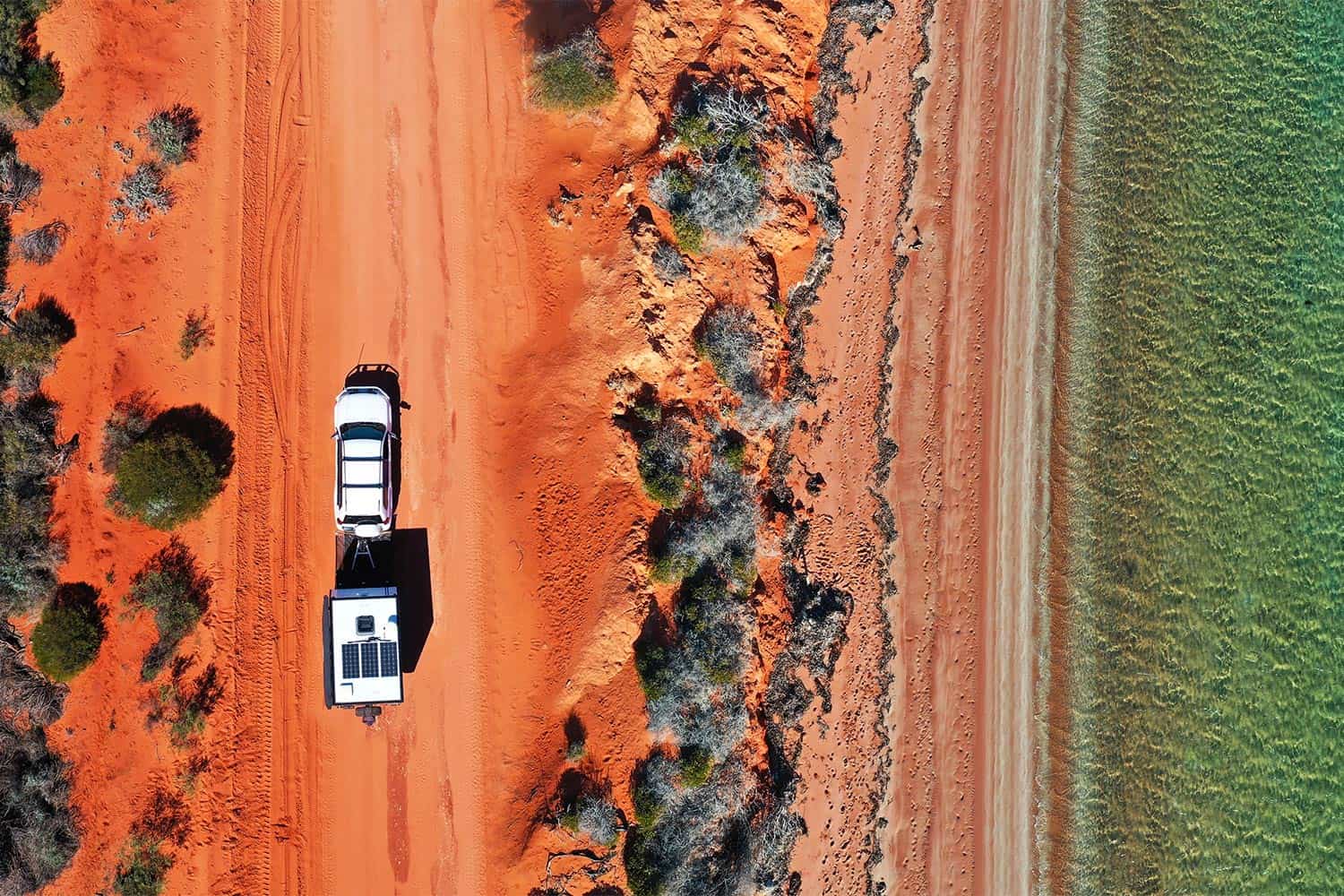
Beach driving is an Australian favourite! Towing a trailer or camper on sand adds an extra challenge, but the pointers below will help you overcome it.
- Drop your tyre pressures. We’d recommend getting the vehicle and trailer tyres down to 16 to 20 PSI. You get a bigger footprint when you do this which helps with traction. Make sure you remember to pump them up again when you get off the beach.
- Maintain momentum. If you stop in soft sand it’ll be difficult to get going again. Once you’re moving, keep a steady and safe pace going.
- Avoid sharp turns. They can dig your tyres into the sand and cause bogging.
- Don’t get caught out by a rising tide. Keep an eye on the tide times and plan your drives to suit.
- Rinse your car and trailer thoroughly after the trip, because salt and sand are brutal on metal. Wash down your towbar, hitch and trailer frame too to prevent corrosion.
- Turn your brake controller to ‘0’. Turn your brake controller off when entering and exiting the beach or ‘cutting’ as a slight tap of the brake pedal added with momentum can jam your trailer brakes and sink you into the sand.
Bush Tracks and Off-Road Trails
Bush tracks can be tight, steep and unpredictable. Your trailer will follow your path, but it needs room to move.
- Take it slow. Corrugations, rocks and ruts can shake your trailer and gear to bits if you hammer through them.
- Low range is your friend. It gives you more control on steep climbs or loose surfaces.
- Watch for sway. Uneven ground can set your trailer swaying. A good brake controller can help bring it under control quickly.
- Mind your clearance when going over bumps or obstacles in your path. Be cautious and keep an eye out for logs and sticks that could pierce a tyre.
- Allow extra room for turning and navigating tight obstacles, take easier routes when available and be cautious of momentum and speed. The motto ‘Just send it’ will only lead to damage and safety hazards for you and the people surrounding you.
- Another tip is if your trailer has electronic stability control, unplug or turn the system off when offroading. If the system is active it will try and activate whilst on trails and tracks.
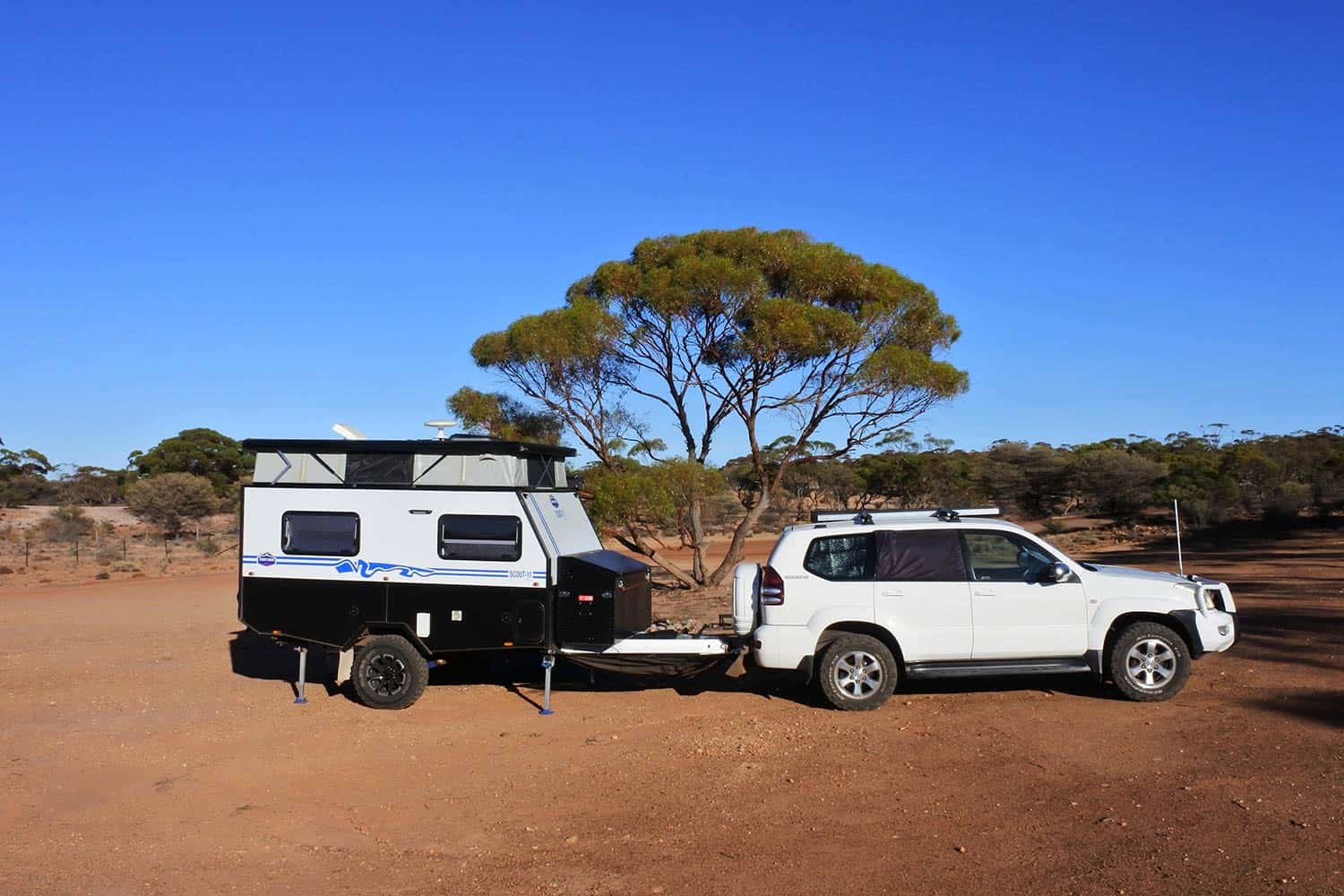
Powering Your Off-Grid Setup
If you’re heading somewhere remote, you’ll want power for the essentials such as your fridge, lights, phone chargers and maybe even a water pump.
- 12V setups. A reliable 12V accessory system means you can run your gear without draining your vehicle battery.
- Dual battery systems. These let you keep the campsite running while still being able to start your car in the morning.
- Solar panels. A great option for longer stays, keeping your batteries topped up without running the engine.
If you’re unsure what size power system you need, talk to a team member at Speedy. We’re here to help guide you to a seamless adventure holiday!
Off-Road Accessories We Recommend
Outside of the obvious and more sought-after modifications i.e Bigger tyres, lift kits, Snorkels that naturally come to mind when you think of offroading and touring, here are some accessories worth every cent when you’re towing off-road. They make your life easier, and can get you out of sticky situations.
- Reputable brake controller. Essential for managing trailer braking on steep or uneven ground. Most likely a legal requirement if you are towing a larger trailer, too.
- Tyre pressure monitoring system. Let’s you keep an eye on tyre pressures without having to stop.
- Recovery gear. Shovel, snatch strap, recovery boards and gloves.
- First aid kit. You might not need it, but you’ll be glad to have it if you do.
- Satellite phone or PLB. If you’re going really remote, it’s a lifeline in an emergency.
- Flashlight with spare batteries.
- Not really an accessory, but something that is essential is letting someone know your itinerary. If the worst happens and you are unable to reach out for help, having someone who knows your route and ETA can be essential when it comes to getting help uf you need it.
After the Off-Road Towing Trip
Once you’re back on the bitumen and heading home, don’t switch off just yet. Doing a few maintenance checks will help ensure your towing setup is right and ready for your next holiday. Here’s what to do:
- Check for damage. Look for bent components, loose bolts or cracks in the trailer frame. Extremely important if there has been some ‘hectic’ adventuring.
- Clean everything. Dirt, mud and salt can hide damage and cause corrosion.
- Service your trailer. Wheel bearings, brake pads and suspension work harder off-road and should be checked regularly.
Contact Speedy Towbars for Off-Road Towing Guidance
Loading the family into your Four Wheel Drive and towing your camper or trailer around Australia is up there with the best ways to see our beautiful country. For utmost enjoyment, you want to engage in some solid preparations for your trip. Knowing what you’re getting into will give you the confidence to take on the beach, bush and back roads with confidence. Off-road towing is about being careful, safe and well-prepared.
The Speedy Towbars team is here to guide you with no-nonsense advice about the best towing gear for your next adventure. We all live this life of outdoor exploring too, and we’re happy to give you destination, technique and general towing tips! Let’s make your holiday a success!
Head into our Speedy Towbars Everton Hills or Slacks Creek branch, or give us a call on 1300 773 339 right now!

Jordan is the co-owner of Speedy Towbars and a trusted source of towbar knowledge for Queensland drivers. When he's not installing towbars, he treasures time with his family and hitting the road for caravanning adventures!