

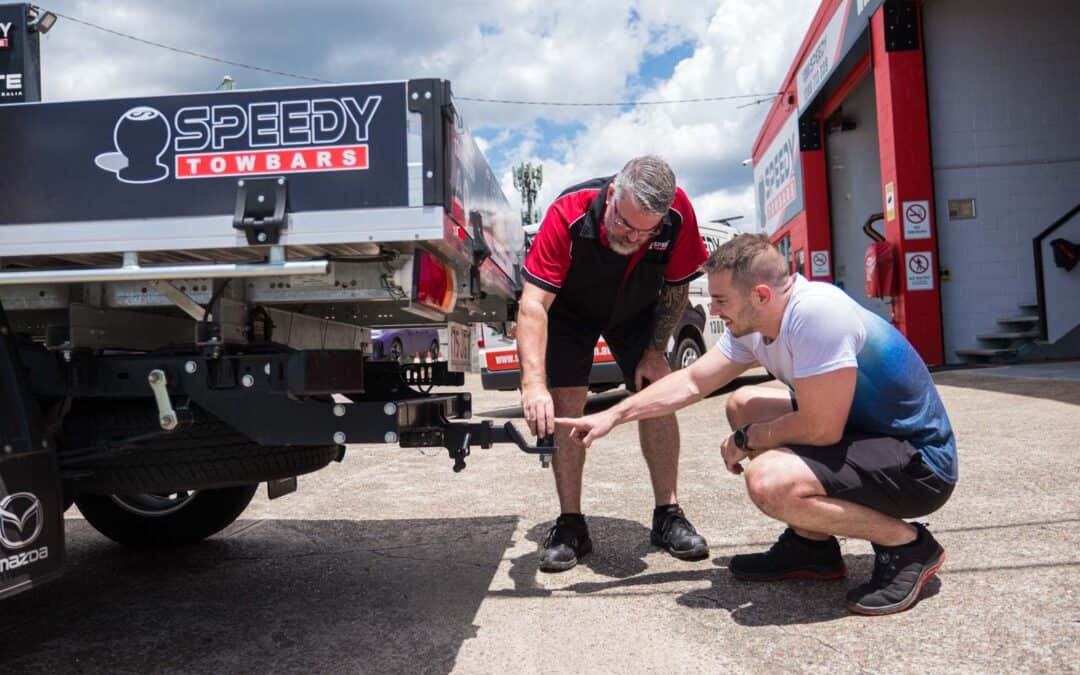
You’ve got the towing gear, and you’re ready to roll! Premium quality towbar from Speedy Towbars – check. New caravan or trailer – check. A burning urge to get out on the road and enjoy an adventure – check. What a good feeling – now it’s time to connect you to your next big adventure!
Before you chuck everything in the trailer and hit the road there’s one thing worth getting right from the get-go, and that’s loading your trailer or caravan the correct way. Doing this properly helps keep you safe on the road, so you, your family and your possessions arrive at your destination without any trouble.
Let’s take a look at some best practices for loading a trailer or caravan the right way. These will help to ensure your towing experience is smooth and safe.
Ball Weight and Balance
Ball weight and load balance are the two important concepts to bear in mind when you’re loading a trailer.
Ball weight is the downward force the trailer puts on your tow ball. Getting this wrong by making your ball weight too heavy or too light and you will have serious handling issues. Too much weight on the ball will make the rear of your towing vehicle sag. This can cause havoc with your steering and braking. If there’s not enough weight on your tow ball (too light), then the trailer will fishtail behind you like it’s auditioning for a rodeo.
As for balance, it’s all about even distribution. You want the weight centred – not too much at the back, not too much upfront and nothing leaning too heavily to one side. Get your balance right in your trailer and you’re off to a great, safe start.
Safe Trailer Loading Tips

Let’s get into it with the Speedy Towbars safe trailer loading tips! These are some key concepts to keep in mind every time you pack your trailer or caravan:
1. Know Your ATM (Aggregate Trailer Mass) and Don’t Exceed It
The ATM is the total weight of the trailer when fully loaded. This includes any accessories, water tanks, gas bottles, and everything you’ve packed inside. You’ll find your trailer’s ATM on its compliance plate next to the VIN number.
When your trailer is fully loaded, it needs to stay under the ATM. This is a legal requirement, so its not just a box to tick. It’s also extremely important for the safety of you and others on the road. Exceeding the ATM will make towing harder and more dangerous, and your insurance might not cover you if something goes wrong.
Know your weight limits and stick to them! Learn more about towing terms and acronyms here.
2. Use a Tow Ball Scale to Check Your Ball Weight
We touched on ball weight above. Traditionally your ball weight should be around 10% of your loaded trailer weight, though some setups may vary.
How do you know what your ball weight is, you may ask? A tow ball weight scale is your best mate, delivering a spot-on reading of your ball weight. Using one of these is a simple solution to helping understand if you’re on the right track to a properly loaded trailer!
3. Heavy Items: Load Them Centrally, Over the Axle
This one’s simple but crucial. Heavy items should go over the axles and as close to the centre as possible. That helps keep your trailer stable and your ball weight balanced.
Also, keep them low to the floor. You don’t want your esky or toolbox flying around when you hit a pothole or take a tight corner. Three things to remember: low, central and secure.
4. Side-to-Side Loading: Keep It Even
The dreaded trailer sway is something all drivers want to avoid. A trailer rocking from side to side on the open road can get out of control quickly. Loading it up the right way is a big step towards preventing this from happening.
Here’s the optimal method of doing that: don’t pile everything on one side and hope for the best. Spread the load so the left and right sides are balanced, which will help the trailer track straight and true.
5. Secure the Load: Straps, Tie-Downs, and Covers
You don’t want items banging around inside your caravan, and you don’t want anything unsecured flying off your trailer onto the road. Loose gear and trailers simply don’t mix – whether you’re doing a quick tip run or a weekend camping adventure.
Use ratchet straps, bungee cords, or cargo nets to secure your load. Anything that can move with the wind should be covered properly and tied down. Check everything is tight, and then double-check it! This is about protecting your gear and the drivers behind you. Also, don’t forget the most crucial part – verbalising “that’s not going anywhere” when doing your final check!
6. Check Tyre Inflation and Condition
Trailer tyres have a heavy workload and bear the brunt of your wear and tear. Always check them out before you pull out of the driveway. It’s important they’re inflated to the correct pressure and are in good nick. Any cracks, bald tread or bulging sidewalls and we’d recommend getting them replaced as soon as possible.
Don’t forget to check the spare, too! When you need it, you really need it.
Contact Speedy Towbars With Your Towing Safety Questions
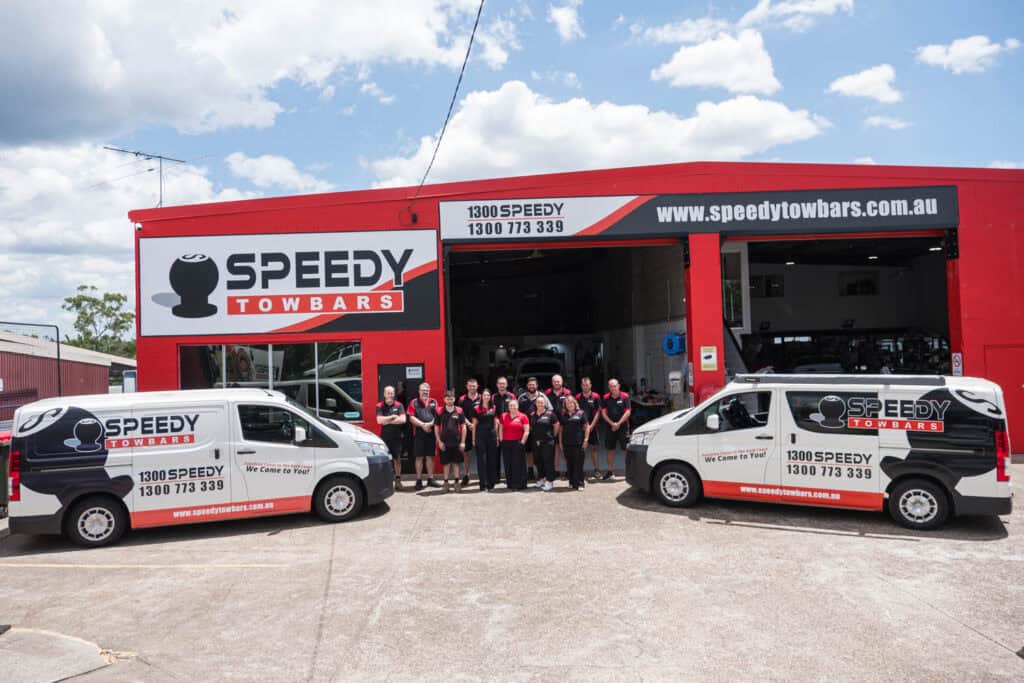
We want your towing experience to be fun, enjoyable and above all, safe. With the right setup, advice and trailer loading skills, you’re well on your way to a seamless experience!
The Speedy Towbars team is always here to chat about anything to do with towbars and towing. Whatever you’re towing, from jetskis to caravans, we’re here to advise you on how to do it safely!
If you’ve got questions about load safety, towbar capacity, or the right accessories, give us a call or pop into our Everton Hills or Slacks Creek branches. Remember, we also have a team of mobile towbar installers servicing South East Queensland. And no matter where you’re located in Australia, you can purchase a premium towing product through our online towbar store!

Jordan is the co-owner of Speedy Towbars and a trusted source of towbar knowledge for Queensland drivers. When he's not installing towbars, he treasures time with his family and hitting the road for caravanning adventures!