


You’ve booked your towbar installation in, maybe even ordered the caravan. The plans for the first adventure away are falling into place. Then somebody asks whether you’ve thought about an Anderson plug. “What’s an Anderson plug?” you ask.
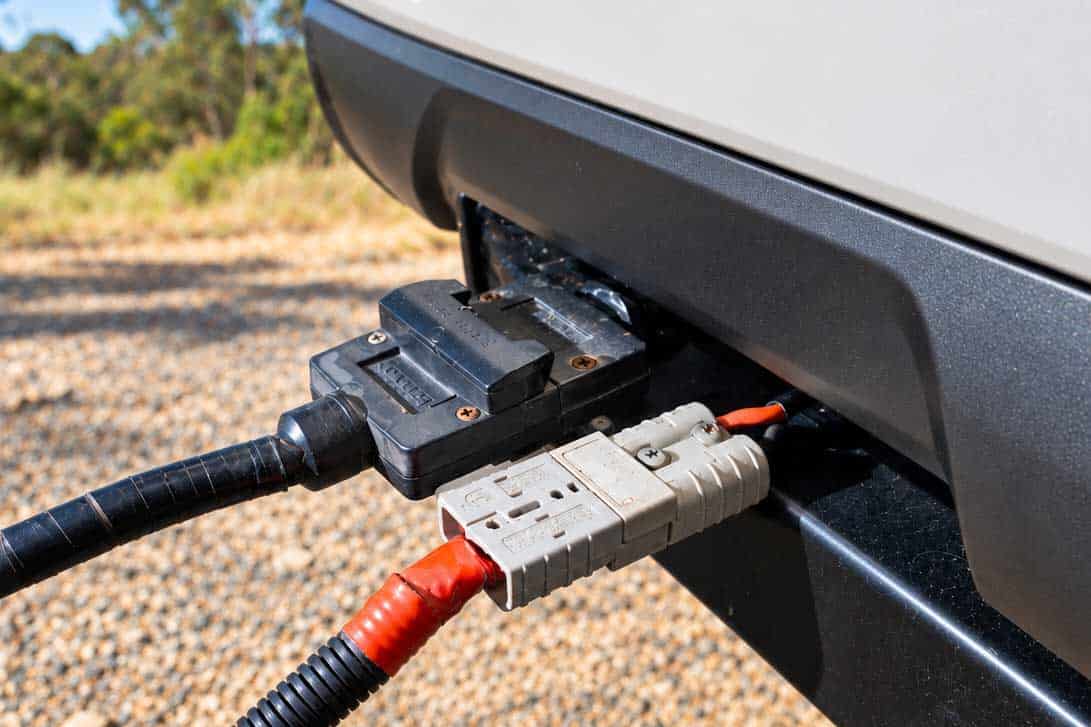
An Anderson plug is a heavy-duty connector that carries power from your vehicle to your caravan or trailer.
There are some jobs that pull more power than your trailer plug can handle. That’s when an Anderson plug comes into play. We’ll take a close look at what they are and whether you need one for your setup.
Anderson Plugs Explained
Anderson plugs are chunky connectors built to carry high electrical current safely. The name comes from Anderson Power Products, which is the company behind the original design. It’s become something of a blanket term to refer to any connectors in that style today. They’re common across 12V setups in the caravanning, camping and 4WD-ing space.
The plug itself consists of two matching connectors that clip together firmly and pull apart easily when you unhitch the trailer. They come in a few different sizes and current ratings to suit different jobs, so you need to do a bit of research to see which one suits your application best.
You can always chat to the Speedy Towbars team if you need guidance on that.
Not Part of a Standard Installation
Important to note: an Anderson plug isn’t part of a standard towbar and 7-pin trailer plug installation. It’s an extra that you need to tell your towbar installer you need.
If you’re booking your vehicle in with Speedy for the install, tell us beforehand if you’re after an Anderson plug. We’ll get it sorted for you.
What Does an Anderson Plug Do When You’re Towing?
The Anderson plug moves power between your tow vehicle and the trailer or caravan hitched behind it.
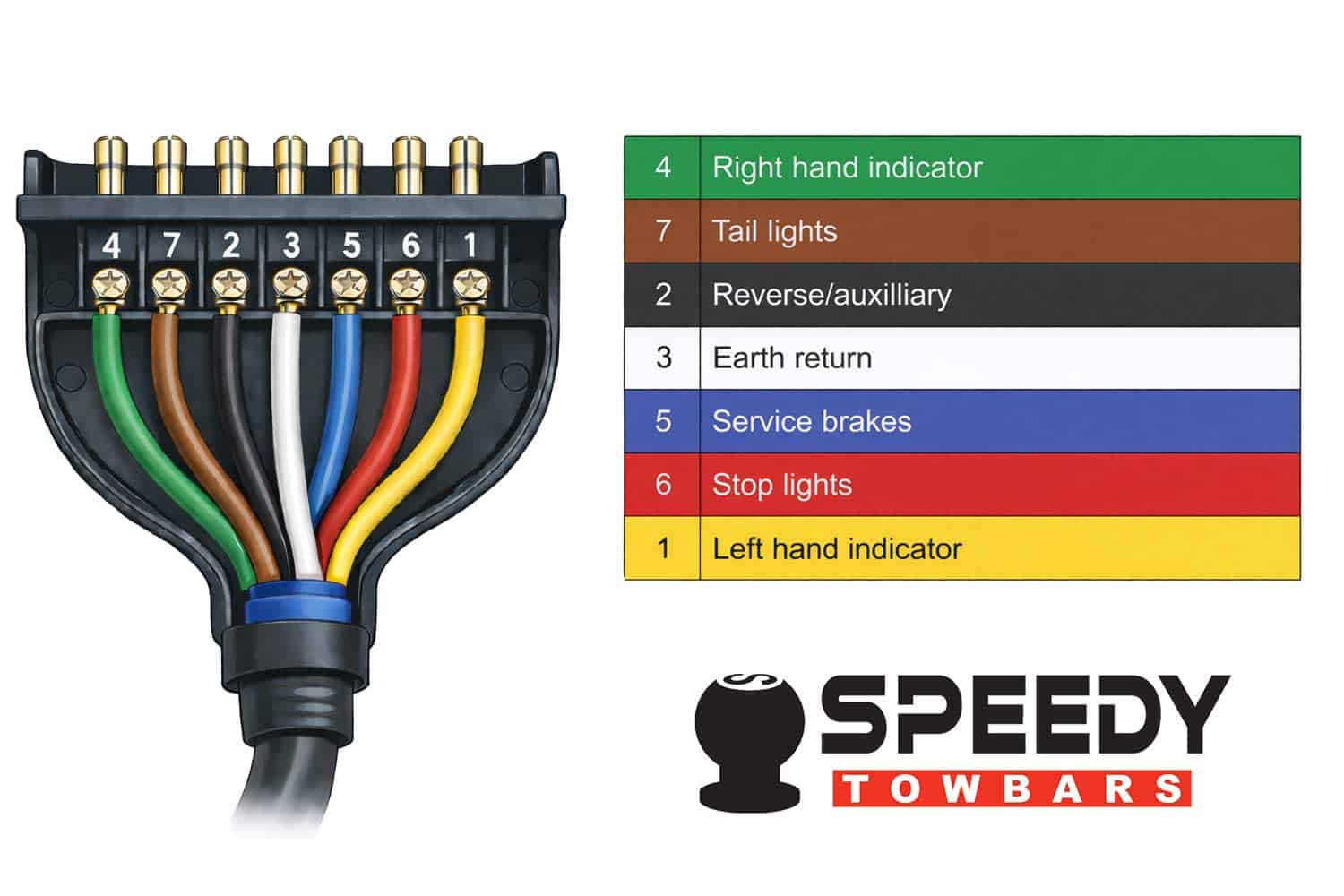
What it doesn’t do is run your trailer lights. Your indicators, brake lights and tail lights are handled by your trailer plug and towbar wiring. The Anderson plug sits alongside that as a separate, dedicated power line.
What Are Anderson Plugs Used For?
They have a wide range of uses, but in a towing setup these are common functions of your Anderson plug:
Charging your caravan battery
With the right setup, your vehicle can charge the caravan’s battery while you drive. Remember, though, the plug itself isn’t a charging system. Many newer vehicles have smart alternators, and different battery types (lithium in particular) have their own charging needs. Often your setup will include a DC-DC charger to get it right.
Running auxiliary equipment
An Anderson connection can supply power to other gear in your caravan or trailer. What it can run depends on the wiring, the current draw and the electrical system you’re working with.
Powering a caravan fridge
Some caravan fridges can draw power through an Anderson setup while you’re travelling. Again, it depends on the fridge and how your van is wired, so don’t assume the plug will power every type of fridge.
Anderson Plug vs Trailer Plug: What’s the Difference?
They do different jobs, and plenty of tow vehicles have both fitted side by side.
Your trailer plug carries the signals and functions your trailer needs to be road legal and safe: indicators, brake lights, tail lights and other circuits depending on the connection. The Anderson plug handles the heavier power supply when your van or trailer needs it.
Not sure which trailer connection suits you? Our 7-Pin vs 12-Pin Trailer Plugs guide breaks it down.
Do You Need an Anderson Plug for Your Caravan?
Not every caravan or trailer needs one. A basic box trailer or boat trailer, for example, will usually get by with its trailer plug alone.
You’re more likely to need an Anderson plug if your van has a battery you want charged on the road, or equipment that draws more current than a trailer plug can supply. Check your caravan’s electrical requirements before you have anything fitted to your vehicle. You don’t want to pay for gear you won’t use.
If you’re uncertain, have a chat with one of our team members, and we’ll look at whether it’s a requirement for your setup.
Do You Need One With a 7-Pin or 12-Pin Plug?
Possibly. Picking a 7-pin or 12-pin trailer connection doesn’t decide whether you need an Anderson plug, because they’re doing separate jobs.
Your trailer plug looks after road lights and other trailer functions. The Anderson plug gets added when your van or trailer needs extra power on top of that. The right combination depends on what you’re towing and what you want to run.
Where Is an Anderson Plug Installed?
On the tow vehicle, it’s usually mounted at the rear, close to the towbar and trailer socket. Your caravan or trailer has a matching connector on its drawbar.
When you hitch up, you clip the two together. From there, wiring runs forward to the relevant part of your vehicle’s electrical system.
What Size Anderson Plug Do You Need?
You’ll see Anderson connectors rated at 50A, 120A and 175A. You’ll come across the 50A most often on caravans and camper trailers.
Bigger isn’t automatically better. The connector needs to match the whole system: the wiring, the cable size, the circuit protection and the equipment drawing power. Work out what your setup needs first, then pick the connector to suit.
What’s Involved in Anderson Plug Wiring and Installation?
It’s more than bolting a connector next to your towbar.
Anderson Plugs come in Different shapes, sizes, and even colours, and all can serve a different purpose in powering your caravan’s BMS (Battery Management System).
It is important to make sure they match between car and caravan; This is easily done by utilising wiring diagrams provided with the caravan and knowing this information before booking your vehicle in for an installation.
Things such as the Vehicle, BMS inside the van, Battery size and Type, Cable size and even the overall length of cable to your Anderson Plug circuit all play a part in how effectively it will do its job.
Can You Install an Anderson Plug Yourself?
If you’re confident with automotive electrical work, you could possibly DIY your Anderson plug install.
Just keep in mind these circuits carry a lot more current than most of your towing wiring. Undersized cable or a poor setup can mean weak charging; excessive voltage drops or electrical faults. Having the wrong connection, size or colour Anderson plug will mean you physically will not be able to connect your vehicle system to the caravan itself. These issues normally rear their heads at the worst possible moment!
Booking in a professional installation and having the right information from the caravan manufacturer means you can have peace of mind!
Get Your Towing Electrics Sorted
An Anderson plug can be a handy part of your towing setup. But you don’t need one just because you’ve fitted a towbar.
Let the Speedy Towbars team look at your vehicle, what you’re towing, and what needs power. We’ll advise on the right towbar and wiring, and tell you whether you need an Anderson plug.
You can drop in to our Everton Hills or Slacks Creek workshops, get in touch here or call 1300 773 339 for friendly and free advice!

Jordan is the co-owner of Speedy Towbars and a trusted source of towbar knowledge for Queensland drivers. When he's not installing towbars, he treasures time with his family and hitting the road for caravanning adventures!