


When you’re getting a towbar fitted, compliance likely isn’t on your mind. You want to get onto your next towing adventure, whether it’s hooking up the boat, caravan or trailer.
That’s fair enough – but there is still a framework of rules underpinning every towbar and its installation in Australia. Understanding them could save you an expensive problem down the track. Today we’re going to look closely at what they are and how they affect your towbar installation.
Before we dive into them, here’s your introduction to Australian Design Rules (ADR).
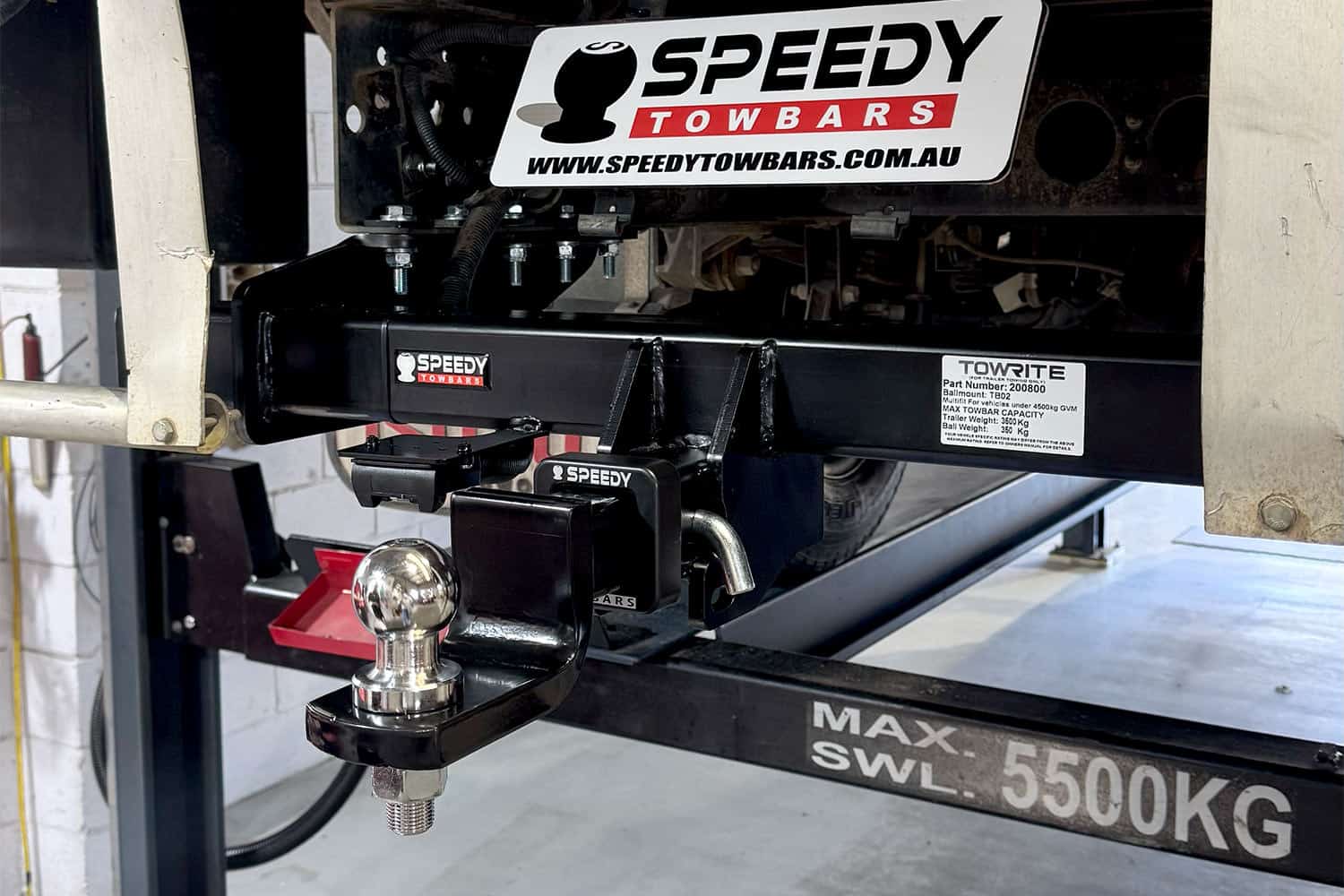
Australian Design Rules (ADR) Explained
Australian Design Rules are the federal government’s technical standards for road vehicles sold in Australia. They cover everything from safety and emissions through to how vehicles are modified, carrying the force of law under the Road Vehicle Standards Act. ADR is a national minimum standard that applies to every registered vehicle on the road, and it covers your towing setup too.
ADR 62/02: The Towbar Design Rule
The design rule that governs towbar installations is ADR 62/02, Mechanical Connections Between Vehicles. The current revision dates from 2009 and applies to all new towbar installations on Australian road vehicles.
Legal Requirement
ADR62/02 is the legal requirement that sets out what a compliant towbar installation must achieve. This includes structural strength, safety chain attachment points, and coupling ratings.
Safety Chains – Worth a Mention
Safety chain attachment points are worth singling out. Under ADR 62/02 clause 13.4, compliance cannot be demonstrated through engineering calculations alone. Physical testing by an approved facility is required. You want a towbar from manufacturers who have done the required testing and build fully compliant towbars.
AS 4177: The Technical Standard
ADR 62/02 references the AS 4177 series of Australian Standards. This is where the specific technical details live. These include:
AS 4177.1-2004
This covers the structural requirements for the towbar itself, including how it must be designed and tested to handle real-world towing loads.
AS 4177.2
This covers 50mm ball couplings, the standard tow ball used on passenger and light commercial vehicles. It sets requirements around design, construction, dimensions, strength, and testing.
One practical detail that flows from this is the tow ball rating must be physically stamped on the ball, and it needs to be rated above the weight you plan to tow.
Why Towbar Brand Matters
As you can see, the brand of towbar you choose is very important for compliance and warranty reasons. It also makes a huge difference to the reliability and longevity of your setup. That’s why we’re very particular about the brands we offer our customers here at Speedy.
A brand that we never hesitate to recommend is TowRite. Manufactured in Brisbane and engineered to meet and exceed the standards above, they come from a company familiar with Queensland road and weather conditions. Compliance, reliability and peace of mind – you’re getting all of it with a TowRite towbar.
Trailer Wiring
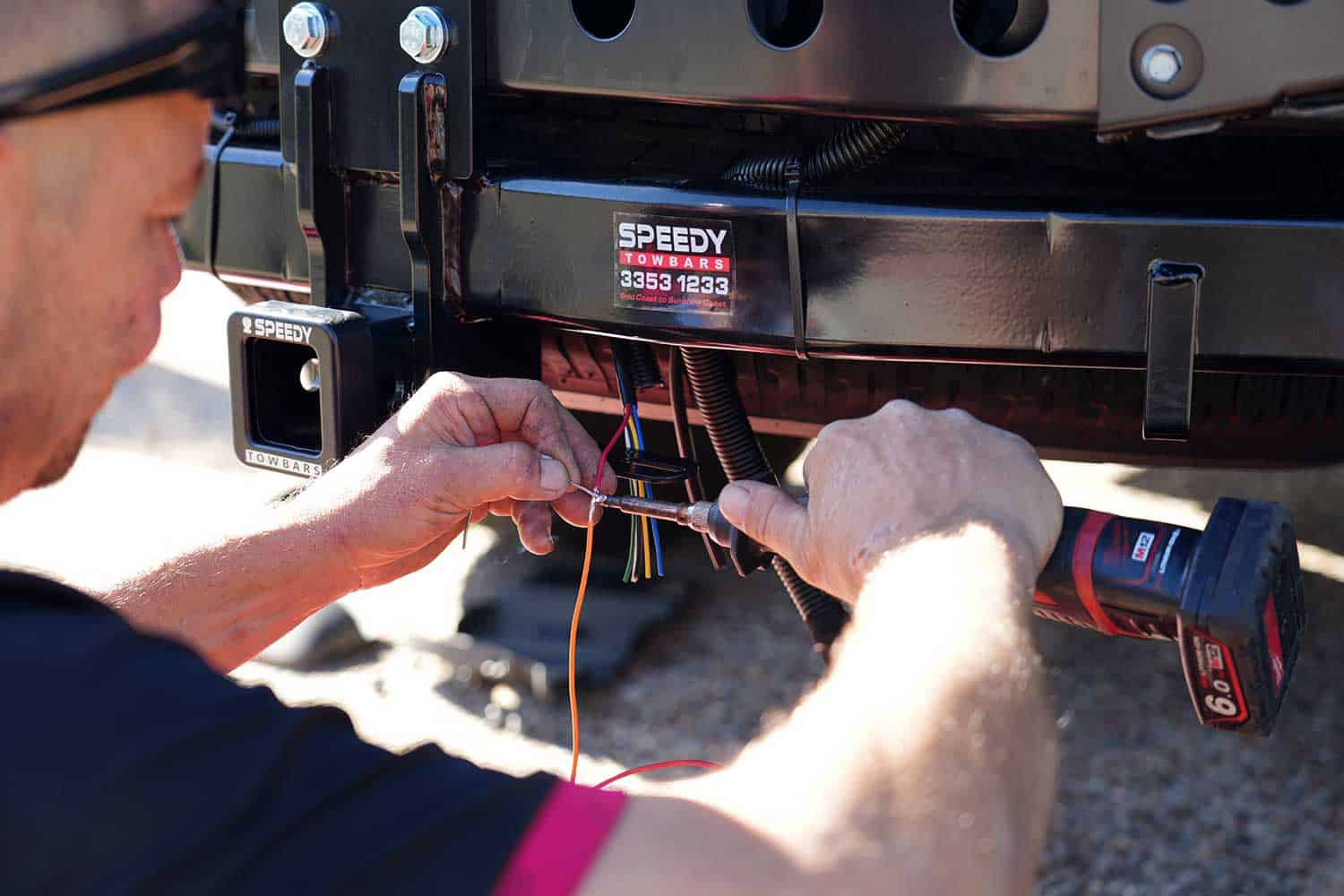
The electrical side of a towing setup is regulated like the mechanical side. Let’s break it down:
The Design Rule: ADR13/00
This governs the installation of lighting and light-signalling devices on trailers. Non-compliant wiring can render a vehicle unroadworthy, with serious implications for insurance if you’re involved in an accident.
The Technical Standard: AS4177.5 and AS4735
Again, these standards are referenced by the Design Rule for the technical details.
AS 4177.5-2004: Applies to flat connectors used on most everyday towing setups.
AS 4735-2003: Applies to heavy duty round connectors on vehicles and trailers over 3.5 tonnes.
7-Pin Flat Plugs
The 7-pin flat plug is what most Queenslanders will be familiar with. It handles indicators, brake lights, tail lights, and the electric brake controller circuit through a standardised pin layout. Your trailer and tow vehicle talk to each other correctly. Our team will be able to tell you if this is the best plug for your towing setup, or whether we need to look at alternative options like the round connectors.
Modern Vehicle Wiring
Modern vehicles are loaded with far more technology than they used to be. This equals more complicated wiring. Most newer cars run CAN-bus electrical systems. With this system, stability control, reversing sensors, and other electronics can be thrown off if there are problems with the wiring harness.
What About Non-Compliant Installations?
There are a number of issues with a non-compliant towbar:
- It can affect your insurance cover, especially if an incident involves your trailer.
- You can run into trouble at roadside inspections if your setup doesn’t meet legal requirements.
- When you try to sell the vehicle, you could experience issues with attaining the correct certifications for sale.
It’s worthwhile making sure you have a compliant and legal towbar and wiring from the get-go. It will be cheaper and less hassle than sorting it out later.
Book your Compliant Towbar Installation
Any questions about towbar standards? Our team is always here to answer them and to book you in for a towbar installation that meets and exceeds Australian standards. Get in touch with us here or call us on 1300 604 060. We’re always happy to run you through your options before you book anything.
Every Speedy installation meets the correct set of ADR and AS regulations, whether it’s performed at Everton Hills, Slacks Creek or by our mobile team. For extra peace of mind, we also provide a lifetime warranty on the towbar and wiring.

Jordan is the co-owner of Speedy Towbars and a trusted source of towbar knowledge for Queensland drivers. When he's not installing towbars, he treasures time with his family and hitting the road for caravanning adventures!